Health Coaching App Development Guide

If you’re exploring health coaching platform development right now, you’re walking into a market that’s quietly turning into real healthcare infrastructure, not just “wellness side quests.” The global health coaching industry is already worth around $18–19B and is expected to push toward $30B+ within the next five years. Digital health coaching alone is forecast to roughly double by 2030, growing at ~12–13% annually.
And it’s not just revenue slides and TAM decks. In recent trials, more than 70% of people with type 2 diabetes using an AI-supported coaching app brought their HbA1c below 6.5% and were able to reduce or even discontinue glucose-lowering meds. That’s not “engagement.” That’s hard clinical outcomes.
The catch? The same market is flooded with generic tracking apps that count steps, nag people about streaks, and quietly drive shame rather than behavior change. The difference between those two worlds isn’t a prettier dashboard — it’s how you design data, coaching, and accountability into an actual health coaching application, not just a logbook.
This guide is for the people trying to build that kind of platform.
Key Takeaways
- Design for behavior change, not step counts. The battle isn’t “more tracking,” it’s helping people actually follow through when life is messy. The moment your app starts influencing weight, labs, or mental health, you’re in real healthcare territory — which means HIPAA, clinical guardrails, and a roadmap that treats outcomes and safety as first-class citizens, not add-ons.
- Treat the app as an encoded service line, not a feature buffet. The winners are the teams that define a sharp offer (“we help X achieve Y in Z months”), pick one core workflow to nail, and validate it with a thin V1 + tight pilot before scaling. Most of the wasted budget comes from trying to ship “platform ambitions” in v1 and reinventing plumbing instead of encoding a proven coaching model.
- Use Specode’s AI builder to skip the plumbing and build like a clinician. Instead of starting from a blank repo, providers can describe their health coaching workflow in natural language (“weekly video visits, daily check-ins, labs every 3 months”) and let Specode’s AI builder assemble HIPAA-ready components — auth, roles, messaging, scheduling, tracking, audit logs — into a working app they still fully own and can extend. That turns “we should build a coaching platform” from a year of infra work into a few focused build sessions plus clinical refinement.
Why Health Coaching Apps Are a Different Sport Than Generic Fitness Trackers
I’ve lost count of how many founders come to us saying they want to “be the next habit-tracker with macros.” And every time, I give them the same message:
If you’re not designing for behavior change, you’re just counting steps.
Tracking is easy. Coaching is hard. That’s the entire difference between generic wellness apps and health coaching app development worth investing in.

Because a health coaching application isn’t built to remind someone they missed leg day — it’s built to help people who already know what to do actually do it consistently. That’s a different sport altogether.
Behavioral Change vs. Tracking
Most trackers focus on inputs: calories, steps, hours slept. But coaches — the human ones and the digital ones — focus on outputs:
- Adherence
- Confidence
- Identity shifts
- Sustainable routines that survive birthdays, travel, and life hitting the fan
If you’ve ever watched someone delete a fitness app out of shame, you know exactly what I’m talking about. Data without context becomes a mirror people avoid.
Coaching turns data into decisions.
Decisions into habits.
Habits into health.
When “Wellness” Tips Into Healthcare
Here’s the line nobody talks about:
Once your app begins affecting clinical outcomes — weight loss, diabetes markers, mental health symptoms — you’re not just a wellness tracker anymore. You’re in the business of healthcare. That means:
- HIPAA, if you’re handling sensitive personal info
- Real accountability when outcomes are promised
- A product roadmap that prioritizes patient-level safety and trust over shiny features
Most founders don’t respect that boundary early enough. They build a “fun wellness app” and suddenly realize real clinicians are using it with real patients.
And now they need compliance yesterday.
You’re not building a tracking tool. You’re building a system that changes behavior, improves outcomes, and earns the right to be in someone’s life every day.
If that’s the game you want to play, design it like a coach, not a counter. The rest of this guide is about what that actually looks like in product, data, and day-one scope.
Decide What Business You’re Building Before You Build a Health Coaching App
If you’re trying to build a health coaching app before you can crisply answer “what business am I actually in?” you’re already backwards.

Most founders show up with screens. What they really need is a one-sentence description of the service line they’re productizing:
“We help X type of person achieve Y outcome in Z months, using this specific coaching model.”
Until that’s clear, creating health coaching platform mockups is just expensive procrastination.
Business Models: 1:1, Group, and Hybrid
A 1:1 concierge coaching offer, a group program, and a low-touch membership all have different:
- Price points and margins
- Coach capacity and staffing
- Expectations for response time, content depth, and outcomes
Your health coach platform has to encode those decisions: how often can people message? How quickly do coaches respond? What’s included vs billed as extra services? If you can’t sketch that on paper, you’re not ready for product design.
Remote Program vs. Clinic Add-on
There’s a big difference between:
- A pure remote coaching program that is your product, and
- A coaching experience that extends an existing clinic or telemedicine line
In the first case, your app is the front door of the company: onboarding, payment, programs, retention.
In the second, your app is more like a continuous-care layer: it has to play nicely with EHRs, scheduling, and whatever messy tools the clinic already lives in.
That changes everything from consent flows to “who owns the data?” conversations.
When You Don’t Need a Custom Platform
If you’re still testing:
- Who you serve
- What outcomes you can consistently deliver
- Which coaching cadence people actually stick with
…you probably don’t need custom software. You need a duct-taped stack (forms, Zoom, Stripe, a white-labeled portal) and a dozen paying customers.
The time to invest in a custom health coaching application is when you’re constrained by success: you know what works, and the current toolchain is the bottleneck. Then the app stops being a vanity project and becomes an execution multiplier.
Types of Health Coaching Platforms
When people say they want to develop a wellness coaching app, they usually lump everything together: weight loss, burnout, MSK pain, corporate wellness, mental health support. Under the hood, these are very different animals with different risk profiles, data models, and expectations for outcomes.
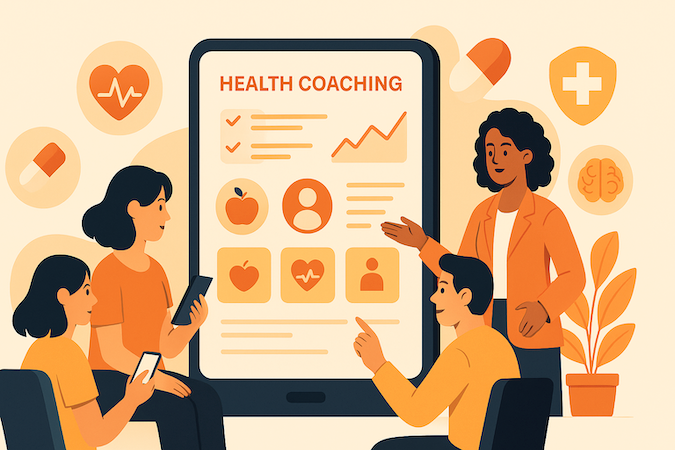
Let’s break them into a few patterns you can actually design around.
Lifestyle and Preventive Wellness Coaching Apps
This is the classic wellness coaching app: sleep, stress, movement, nutrition, maybe a dash of mindfulness.
Under the hood, you’re usually dealing with:
- Roles: clients, health coaches, maybe a lightweight admin
- Data: activity logs, mood, habits, basic biometrics from wearables
- Risk: lower, as long as you stay away from diagnosis, prescriptions, and hard medical claims
Here, your health coaching application wins or loses on habit loops: onboarding, daily check-ins, nudges, and a feedback loop that doesn’t feel like homework. You still need solid consent flows and data privacy, but you’re generally on the “wellness” side of the line.
If all you want is this category, you can get away with a leaner stack, move faster, and validate your program before you go anywhere near clinical territory.
Condition-Specific Coaching
Whole different game.
Now you’re nudging outcomes that clinicians actually care about: A1c, pain scores, blood pressure, post-op recovery — real health metrics, not vanity graphs.
Under the hood, you’ll likely need:
- Roles: patients, coaches, plus supervising clinicians or care teams
- Data: structured clinical metrics, medication adherence, symptom tracking
- Risk: higher — you’re inching toward “virtual care program,” not just wellness
Here, “we’ll just build a pretty interface” is how teams accidentally stumble into regulated care without the guardrails. You need:
- Clear clinical protocols behind every nudge
- Traceability: who told the patient to do what, and when
- A roadmap that assumes integration with EHRs, telemedicine, and maybe remote monitoring
If this is your lane, you’re no longer just trying to develop a wellness coaching app — you’re building infrastructure that has to earn trust from clinicians and regulators.
Employer and Payer-Sponsored Wellness Programs
These platforms live or die on scale and reporting.
Under the hood:
- Roles: employees/members, coaches, employer HR, payer care managers
- Data: engagement, risk stratification, population-level trends, incentives
- Risk: mixed — some programs are pure wellness; others are tightly coupled with care management
The product has to do three things well:
- Feel personal to the individual employee
- Give coaches enough context to actually help
- Give the buyer (employer/payer) dashboards that justify the spend
If you’re selling here, the app isn’t just user-facing; it’s a reporting machine with outcomes, utilization, and ROI baked into the core.
What the Best Health Coaching Apps Got Right
If you look at the usual suspects in this space — think of consumer names like Noom or Omada, or pro-facing tools like Healthie and Practice Better — you’ll notice something quickly: none of them won because of one magic feature. They won because they stitched together behavior design, content, and accountability into a coherent system.

This is the level you have to think at for serious health coach app development, not “should we add badges or dark mode first?”
Winning Patterns: Onboarding, Personalization, Goal-Setting, Community
The best products treat onboarding like the first coaching session, not a signup form.
They typically:
- Ask a few sharp questions to understand goals, constraints, and risk
- Use that to build a personalized starting plan (not a generic “10k steps” template)
- Immediately show the user what happens next — today, this week, this month
From there, they lean hard on:
- Personalization: programs that adapt when someone misses, struggles, or overperforms
- Goal-setting with receipts: clear milestones, not vague “feel better” language
- Community options: groups, challenges, or even just seeing others on a similar path
In other words, they build accountability into the core loop: someone or something is expecting you to show up, and the app makes that visible.
Red Flags: Over-Quantification, Generic Advice, Ignoring Mental Health
Where do even the big players stumble?
- Metric overload – 20+ graphs, zero guidance; users drown in charts instead of decisions
- Generic advice – content that might as well have been scraped from a blog; no sense that the app “knows” the person
- Shame-based UX – streaks that punish instead of encourage, notifications that guilt-trip, language that assumes failure is a moral flaw
- Mental health as an afterthought – pushing harder, more, faster… with no awareness of burnout, anxiety, or disordered patterns the app might be amplifying
These are the traps you want to avoid copying in your own health coaching platform development.
How These Lessons Should Shape Your Own Build
When you sketch your product, don’t start with “features we like from other apps.” Start with:
- What does a great week look like for one user?
- What information do they need at each step?
- Who or what is holding them accountable?
Then design screens that serve those answers.
If you borrow from anyone, borrow the system-level thinking: sharp onboarding, adaptive plans, visible progress, and humane nudges. Everything else is just UI garnish.
Core V1 Experience: Non-Negotiable Features for Health Coaching Software
If health coaching software development had a drinking game, it would be “take a shot every time someone says ‘we’ll add that in v2’ without knowing what v1 actually is.” Let’s not do that.
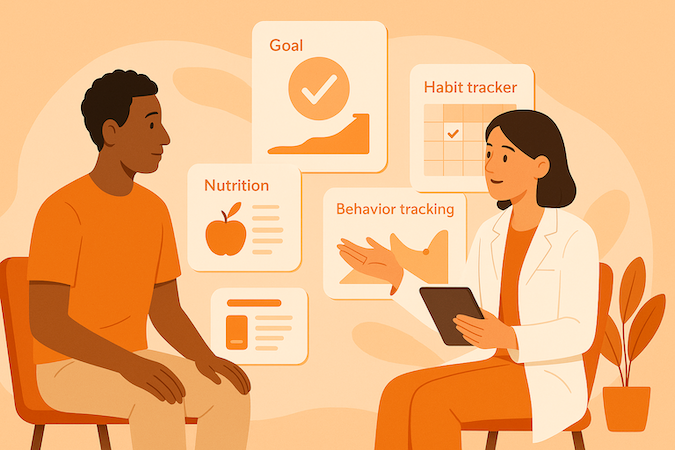
Your Core V1 shouldn’t be a buffet of features. It should be three clean flows:
Onboarding and assessment → ongoing coaching loop → progress and outcomes.
Everything below either serves those flows or gets pushed to later.
Onboarding and Health Assessments
This is where trust is won or lost.
The essential features of health coaching apps start here: a sharp onboarding sequence that gathers just enough data to be useful — demographics, constraints, risk flags — followed by structured health assessments that feel like a conversation, not a tax form, and a clear appointment booking path into the first coaching session.
The goal is simple: by the end of day one, the user should know:
- what they’re working on
- what the next week looks like
- how the app and coach will show up for them
If onboarding doesn’t clearly answer that, everything downstream will underperform.
Goal Setting, Habit Formation, And Behavior Tracking
No more vague “live healthier” promises.
You need concrete goal setting tied to a small number of habits that can realistically change in the next 30–90 days. Then you wrap those in behavior and progress monitoring: daily check-ins, streaks that encourage instead of shame, and clear visuals of client progress over time.
Done right, this is where client engagement starts to feel addictive in a good way: “I don’t want to break the chain, because it finally feels like it’s working.”
Nutrition Tracking, Workout Plans, and Daily Tasks
This is the “do the work” layer.
You don’t need every macro under the sun, but you do need simple nutrition tracking, realistic meal planning, and adaptable workout plans or activity goals. Pair that with a daily to-do list so users always know “today’s moves.”
The rule of thumb: if a coach would write it on a whiteboard, your app should make it effortless to log and follow. This is also where lightweight fitness tracking via steps or active minutes can live, as long as it supports the coaching narrative, not vanity dashboards.
Coaching Sessions (Video and Messaging)
Real coaching needs real contact.
You want a tight combo of synchronous video consultations and asynchronous messaging features. Think:
- scheduled sessions with clear agendas and outcomes
- between-session pings for questions, nudges, and micro-course corrections
These are your primary coaching tools for delivering judgment-free feedback. Architect the app so coaches can see context (goals, recent logs, flags) in the same screen where they chat. Anything that forces tab-hopping will quietly erode client communication quality.
Client Communication, Reminders, And Accountability Loops
Here’s where client retention is either built or destroyed.
You need:
- smart reminders that respect time zones and preferences
- follow-up prompts after missed tasks or sessions
- periodic check-ins that ask, “Is this still working for you?”
The point is to make accountability feel like support, not surveillance. When someone falls off, the system should notice before the coach’s spreadsheet does.
Strong V2 Bets
Once V1 is working, you earn the right to layer in:
- Community features (groups, cohorts, peer support)
- Light gamification (challenges, badges, unlockable content)
- Deeper analytics and integrations with wearable devices for more precise feedback
These can be powerful multipliers, but they’re multipliers on top of a working core.
Shiny Objects To Defer
Two big ones:
- Over-engineered AI “coaches” giving unsupervised advice
- Complex admin analytics suites before you have stable usage data
Both are tempting; neither will save a product that hasn’t nailed the basic flows above.
Get the core experience right first. Everything else should audition for the job of making those three flows faster, clearer, or more human — or it waits in the backlog.
Designing for Behavior Change: UX Patterns That Actually Move Wellness Outcomes
Most “health apps” quietly assume that if you show people numbers, behavioral change will magically follow. It doesn’t. If you want real shifts in health outcomes, you have to design the product like a good coach: specific, supportive, and annoyingly hard to ignore (in a loving way).
From Tracking to Coaching: Turning Data Into Feedback
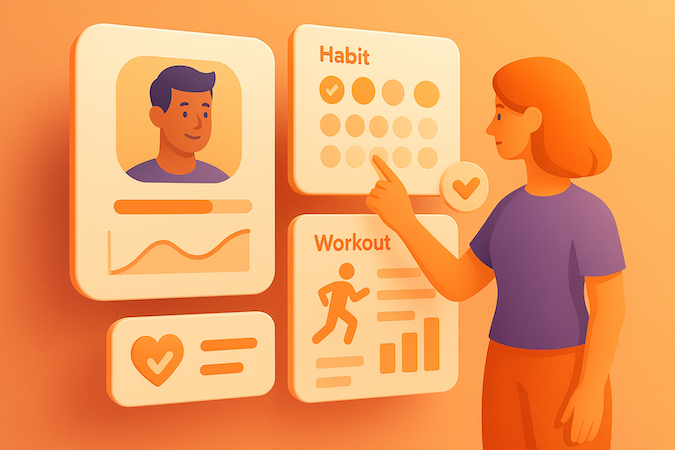
Raw behavior tracking is just surveillance. Coaching is what happens when the app interprets that data and suggests the next tiny move.
That means your UX should always answer three questions for the user:
- Where am I now in my wellness journey?
- What’s the next realistic step?
- Why does that step matter?
Instead of dumping graphs, show short, human interpretations: “Your evening walks are consistent; let’s add one light strength session this week.” That’s personalized coaching, not a dashboard.
Motivational Features and Gamification Without Burnout
Yes, streaks and motivational features work — until they don’t.
Healthy habit formation design looks like:
- Gentle streaks that bend, not break (e.g., “buffer days” instead of instant failure)
- Small, meaningful rewards tied to wellness goals, not vanity metrics
- Progress moments that celebrate effort, not perfection
Gamification should amplify intrinsic motivation (“I like who I’m becoming”), not create a casino of badges. When in doubt, ask: would a human coach say this out loud to someone having a hard week? If the answer is no, that’s a red flag for your user experience.
Building Accountability: Reminders, Challenges, And Coach Touchpoints
Accountability is where most apps quietly lose people.
You want layered support:
- Smart reminders that adapt to behavior (missed tasks → supportive nudge, not scolding)
- Lightweight challenges that can be completed in 5–10 minutes, not weekend projects
- Predictable coach touchpoints: messages after key events, quick check-ins when patterns change
The design goal is simple: it should always feel easier to re-engage than to ghost the app. When accountability feels like personalized coaching instead of nagging, client engagement stops being fragile.
Designing for Lifestyle Changes, Not Quick Wins
Crash programs make for great before/after screenshots and terrible products. Your UX needs to normalize lifestyle changes that fit around real life:
- Plans that scale down, not just up, during stressful periods
- Cycles of intensity and recovery baked into the calendar
- Periodic reflection prompts: “What worked this month? What felt unsustainable?”
If the product only works when someone is in peak willpower mode, it doesn’t work. Design every flow — from goals to reminders — to survive bad sleep, busy seasons, and low-motivation days.
That’s the difference between an app people flirt with for four weeks and a coaching product they keep in their lives for years.
Data, Compliance, and Clinical Boundaries for Health Coaching Applications
Most founders don’t realize they’ve crossed a regulatory line until a clinician or investor asks a simple question:
“Are you managing health data or just wellness preferences?”
The moment your product influences diagnosis, treatment, or condition management — even indirectly — you’re in regulated care territory. That changes every decision you make in product, architecture, and go-to-market.

Is Your “Coaching” App Actually Practicing Medicine?
A wellness coaching app that talks about sleep hygiene and hitting step goals? Probably fine.
A health coaching experience that:
- Helps someone taper medication
- Adjusts protocols based on symptoms
- Surfaces care alerts to a clinician
- Provides recommendations tied to disease markers
…you’re no longer playing in “general wellness.”
That’s the threshold where regulators may view you as delivering medical care through software. Which means: clinical oversight, a risk-managed design, and optionally an FDA conversation if you start to look like a medical device.
PHI, Consent, Audit Trails, and Data Retention Basics
Once you capture individually identifiable health data, you’ve triggered HIPAA — not because you want to, but because the data now requires:
- Role-based access (patients vs. providers vs. admins)
- Consent and session-level data permissions
- Audit trails (who saw what, and when)
- Encrypting data at rest and in transit
- A storage plan that matches medical record lifecycle rules
Compliance isn’t a security badge. It’s evidence that you can be trusted with people’s lives in the margins.
Handling Data From Wearables and Telemedicine Features
A lot of teams assume wearables = wellness. But if you pipe a continuous glucose monitor into your coaching workflows? Or surface cardiac symptoms collected from an Apple Watch during telemedicine app development?
Congratulations — you’re handling medically actionable data.
You need workflows around:
- Signal validity (false alarms can harm people too)
- Clinical review before recommendations change behavior
- Triaging thresholds that trigger real care escalation
If a metric could get someone treated differently tomorrow, it’s no longer a “fun tracking feature.”
How Mental Health Support Shifts Your Risk Profile
Here’s the sobering part: in mental health app development, the harm of a bad suggestion is higher. If your coaching touches:
- Mood disorders
- Anxiety management
- Post-event behaviors (stress eating, compulsive patterns)
You need licensed oversight, escalation paths, and language guardrails.
This isn’t to scare anyone — it’s to ensure you never ship a product that missteps when someone is struggling.
Step-by-Step: How to Build a Health Coaching App Without Losing a Year to Plumbing
If you’re googling how to build a health coaching app and getting 40-tab fatigue, here’s the sequence I’d actually follow. Think of this as a playbook for building health coaching application infrastructure without turning it into a multi-year science project.
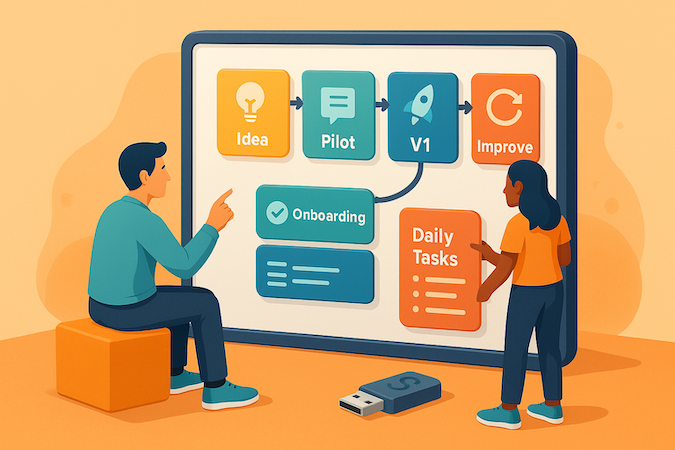
Step 1: Clarify Outcomes and Constraints
Before wireframes, answer three hard questions:
- What outcomes will you claim? (weight change, A1c, pain scores, burnout scores)
- Who’s paying? (consumer, employer, payer, clinic)
- What guardrails do you need? (HIPAA only, or clinical oversight, or FDA risk on the horizon?)
If you can’t state this in one paragraph, you’re not ready to develop a health coaching app yet — you’re still defining the service.
Step 2: Map Journeys and Must-Have Use Cases
Next, sketch the real journeys:
- First-time user from ad → onboarding → first week of tasks
- Ongoing remote coaching loop (check-ins, adjustments, escalations)
- Re-engagement after someone goes dark
Capture only the flows you’d be embarrassed not to have in v1. Everything else is backlog.
Step 3: Choose Your Build Path: Custom, Platform, or Hybrid
This is where a lot of teams burn a year.
You’ve got three options:
- Full custom build (maximum control, maximum plumbing)
- Vertical or health coaching app development platforms (faster, opinionated, sometimes rigid)
- Hybrid: assemble on top of a healthcare foundation (auth, roles, messaging, scheduling, audit logs) and customize the experience layer
Your budget, timeline, and compliance posture should decide this — not your engineer’s framework preferences.
Step 4: Design Around One Core Workflow
If you try to make a health coaching app that does everything for everyone, you’ll ship nothing.
Pick one core workflow to nail first, e.g.:
- “Metabolic coaching for busy professionals”
- “Post-op MSK recovery with physio oversight”
- “Nurse-led burnout program for clinicians”
Design the app so that one workflow feels absurdly polished. v2 can add other paths.
Step 5: Prototype the Experience, Not Just the Screens
Before committing to months of build:
- Prototype onboarding, first week, and a coach session using low-code tools or even slideware
- Run it with 5–10 real users
- Watch where they hesitate, skim, or ignore content
You’re not trying to develop a wellness coaching app yet; you’re validating that the program and cadence are worth encoding in software.
Step 6: Build the Thin Slice Of V1
Now you earn the right to write code.
Implement:
- Onboarding + assessment
- Task/plan delivery
- Messaging + at least one live session format
- Simple progress view
No fancy analytics, no community engine, no 17 notification types. Just enough to make one full coaching cycle work.
Step 7: Run a Tight Pilot With a Small Cohort
Recruit a handful of real clients:
- Charge them (even modestly)
- Have coaches use the system as their primary tool
- Track engagement, adherence, and at least one outcome metric
This is where you find out if your v1 is a product or just a prettier spreadsheet.
Iterate Ruthlessly Before Scaling
Only after the pilot should you start tuning the machine. Sit with your coaches and users, walk through real sessions, and fix the flows that caused hesitation, confusion, or “we just hacked it in a spreadsheet” moments.
Where you see humans doing the same thing over and over, that’s your signal to add just enough automation to remove friction without killing the human feel. From there, be disciplined: prioritize the next features that genuinely improve outcomes or make coaching more efficient, and park the rest.
If you follow this sequence, you don’t just develop a health coaching app — you ship a focused product that proves it deserves more investment.
Technology Stack Choices For Health Coaching Platforms
Most teams blow six months arguing about frameworks when they should be arguing about outcomes. The technology stack for health coaching apps is just a means to an end: clean data, reliable coaching loops, and a product you can actually ship.
You’ve basically got three paths.
Custom Build from Scratch
Maximum control, maximum plumbing. You own every decision about auth, roles, messaging, scheduling, audit logs, and scalability. That’s great if you’re already a funded infra company with strong engineering leadership. If you’re not, fully custom is often the slowest way to start building health coaching application logic that works.
Vertical SaaS / Off-the-Shelf Platforms
Here you’re renting someone else’s opinion about health coaching platform development. You move fast, you get common features out of the box, but you inherit rigid data models and roadmap dependency. Works well for simple programs or early validation; gets painful when you want deeper integrations, custom reporting, or differentiated UX.
Component-Based Assembly Platforms
This is the middle lane: start with healthcare-grade primitives (auth, roles, messaging, scheduling, audit logs, PHI boundaries), then assemble your app on top.
You still own the product and code, but you’re not reinventing HIPAA plumbing or telehealth basics. It’s also where integrations—EHR, payments, labs, wearable devices—can be added when they’re truly needed, not “just in case.”
AI fits here cleanly: in-app coaching agents for users, and AI-assisted app building for your team. You get leverage without betting the whole roadmap on a blank prompt box.
Monetization and Unit Economics of Health Coaching Platforms
Monetization strategies for health coaching platforms shouldn’t start with price — they should start with how much coaching intensity your model actually delivers. Because the more human time a user expects, the more value you can charge for — and the more discipline you need around conversion, client retention, and margins.

Pricing Models That Match Coaching Intensity
There are really only three archetypes:
- Low-touch B2C subscriptions
Automated content + occasional check-ins → lower ARPU, higher churn risk - Hybrid memberships
Human coaching layered on personalized plans → stronger retention, higher willingness to pay - Specialty care programs sold to employers/payers
Measured outcomes tied to reduced medical spend → highest contract value and defensibility
Your pricing must reflect your services mix. If your value comes from humans, don’t price like a meditation app.
Packaging: Programs, Cohorts, Add-On Services
Packaging is where smart teams unlock revenue without bloating the roadmap:
- Programs with a clear beginning and end drive commitment and referrals
- Cohorts create social accountability (and better margins: one coach → many participants)
- Upsells like 1:1 video calls, advanced nutrition guidance, or lab-linked wellness programs create value for high-needs users
Think “tiers of support,” not just “more features.”
Metrics That Actually Matter
Avoid vanity dashboards. What investors and clinical buyers care about:
- Engagement that predicts outcomes
- Program completion rates
- Referral rate (proof of delight)
- Cost to acquire a retained subscriber
- Outcome deltas supported by data analytics
You’re not judged on app installs — you’re judged on whether people are measurably healthier in 90 days.
If you monetize like a coaching business disguised as an app — not the other way around — you end up with pricing power, loyalty, and a platform people trust enough to recommend.
Budget, Timeline, and Team: What It Really Takes to Create a Health Coaching Platform
If you’re serious about health coaching software development, you’re not in $5k side-project territory anymore.
Most recent healthcare app cost studies cluster around the same story:
- Basic regulated MVPs land roughly in the $40k–$80k band.
- A solid mid-tier product with real workflows and integrations tends to sit in the $80k–$150k range.
- Enterprise-grade platforms (multi-role, deep data, heavy integrations) easily climb into $150k–$300k+.
On top of that, security/compliance can add ~20–30% and healthcare-grade project management another 15–20% of base build cost. That’s the real Cost of creating a health coaching platform — not just “developer hours.”
Typical Ranges and Timelines
For a lean V1 focused on one program, expect:
- Budget: ~$80k–$150k if you’re doing meaningful coaching + PHI handling
- Timeline: 3–6 months from discovery to pilot if you stay disciplined; 6–12 months isn’t unusual in regulated builds that keep growing in scope.
Trying to cram “platform ambitions” (multi-condition, multi-role, heavy analytics, EHR + labs + wearables) into that first release is one of the most common health coaching app development challenges. The scope, not the tech, kills you.
Agency vs Internal Team vs Platform + Light Services
- A classic agency build gives you speed and a ready-made team, but you’re paying for that overhead; great when you need to move fast and don’t have in-house product/engineering yet.
- An internal team looks cheaper on paper, but three FTEs in the US for a year can quietly exceed a $300k project — and you still need compliance + DevOps expertise.
- A component-based platform (like Specode) plus a small expert team lets you skip rebuilding auth, roles, audit logs, messaging, and scheduling from scratch and focus your budget on the coaching logic, UX, and integrations that actually differentiate you.
The game isn’t “spend less.” It’s spend most of your money on the parts users and clinicians can feel, and as little as possible on plumbing that’s already been solved.
How Specode Accelerates Health Coaching App Development
By this point, it should be obvious that most of the work isn’t “making screens.” It’s wiring together healthcare-grade plumbing without losing your mind. Specode exists to handle that 80% so you can create a health coaching platform that reflects your actual program, not your PostgreSQL.

Example Blueprint: Remote Metabolic Coaching On Specode
Take a remote metabolic coaching MVP. On Specode you’d start from a working healthcare foundation:
- Patient dashboard + profile for onboarding, health history, and current plan
- Provider dashboard for today’s schedule, risk flags, and client context
- Scheduling + telehealth for recurring video check-ins and ad-hoc consults
- Secure messaging for between-session questions and nudges
- Tracking & outcomes for weight, labs, symptoms, and habit logs
- Goal tracking & resources for programs, content, and after-visit guidance
- Notifications for reminders, missed-task follow-ups, and escalation paths
All of these are reusable HIPAA-aware components, not bespoke one-offs.
You describe the workflow (“weekly video visit, daily check-ins, labs every 3 months”), and the AI assistant assembles the scaffolding: data models, screens, and wiring between components. You still own the code and can extend it however you like.
Iterate With The AI Assistant Instead Of Endless Specs
Instead of burning weeks on PRDs, you talk to the builder:
- Add a streak-friendly habit tracker to the patient dashboard.
- Let coaches tag high-risk clients and surface them on tomorrow’s schedule.
- Tweak the onboarding questions for people on GLP-1s.
The assistant updates the app, and your team tests it with real users, then refines in code where needed. It’s the same outcome you’d get from a traditional agency loop — just 10× faster on the boring parts.
Where Specode’s Dev Team Steps In
When you need deeper work — EHR connections, labs, e-commerce, or advanced analytics — Specode’s engineers handle integrations and last-mile UX on top of the same component base, while you keep full code ownership.
If you're serious about turning your program into software, get started with Specode and sketch your first coaching flow with the AI builder. In a few sessions you'll have a working prototype you can put in front of real users.
And when you’re ready to build your own health coaching app for real patients and real revenue, you’ll already be standing on a HIPAA-ready foundation instead of a throwaway experiment.
Frequently asked questions
The “Core V1 Experience: Non-Negotiable Features for Health Coaching Software” section breaks this down into three flows: onboarding and assessment → ongoing coaching loop → progress and outcomes. In practice, that means sharp onboarding and structured assessments, goal-setting and habit tracking, daily tasks (nutrition, workouts, to-dos), real coaching channels (video + async messaging), and a sane layer of reminders and accountability loops wrapped around it all. Anything that doesn’t serve those flows belongs in the backlog, not in V1.
The “Budget, Timeline, and Team” section pegs realistic bands based on recent healthcare app cost studies: roughly $40k–$80k for a basic regulated MVP, $80k–$150k for a solid mid-tier product with real workflows and integrations, and $150k–$300k+ for enterprise-grade platforms with multi-role support and heavy data/integration needs. On top, expect ~20–30% for security/compliance work and another 15–20% for proper healthcare-grade project management.
“Data, Compliance, and Clinical Boundaries for Health Coaching Applications” is the anchor here. The moment you handle identifiable health data or influence diagnosis/treatment, you’re in regulated territory: HIPAA (PHI handling, role-based access, consent, audit trails, encryption, retention), workflows around medically actionable signals (e.g., CGM, cardiac flags), and higher guardrails if you touch mental health (licensed oversight, escalation paths, language guardrails). The section also calls out the line between “general wellness” and software that may be viewed as practicing medicine.
The same “Budget, Timeline, and Team” section gives a realistic range of about 3–6 months from discovery to pilot for a lean V1 focused on a single program, assuming you keep scope tight. Once you start cramming “platform ambitions” (multi-condition, multi-role, EHR + labs + wearables) into v1, timelines drift into the 6–12 month zone. The step-by-step build section reinforces this: clarify outcomes, map journeys, build a thin slice of V1, then run a tight pilot before scaling, instead of trying to ship everything at once.
The “Monetization and Unit Economics of Health Coaching Platforms” section frames revenue around coaching intensity and buyer type rather than “features.” It outlines three main archetypes: low-touch B2C subscriptions (more automation, lower ARPU, higher churn risk), hybrid memberships with human coaching layered on personalized plans (better retention, higher willingness to pay), and employer/payer programs where contracts are justified by outcome-linked savings. On top of that, packaging via time-boxed programs, cohorts, and add-on services (1:1 calls, advanced nutrition, lab-linked programs) lets you increase revenue per user without bloating the roadmap, as long as you watch the right metrics: engagement tied to outcomes, completion, referrals, CAC vs LTV, and outcome deltas.