HIPAA-Compliant Authentication for Healthcare Apps: What the Rules Require

Updated November 2026
For covered entities and business associates, HIPAA compliant authentication requires unique user identification, verification of claimed identities and audit controls for systems handling ePHI. Automatic logoff is addressable: assess whether it's reasonable and appropriate, implement it when it is, and document a different decision and any appropriate equivalent alternative.
Does HIPAA specify MFA?
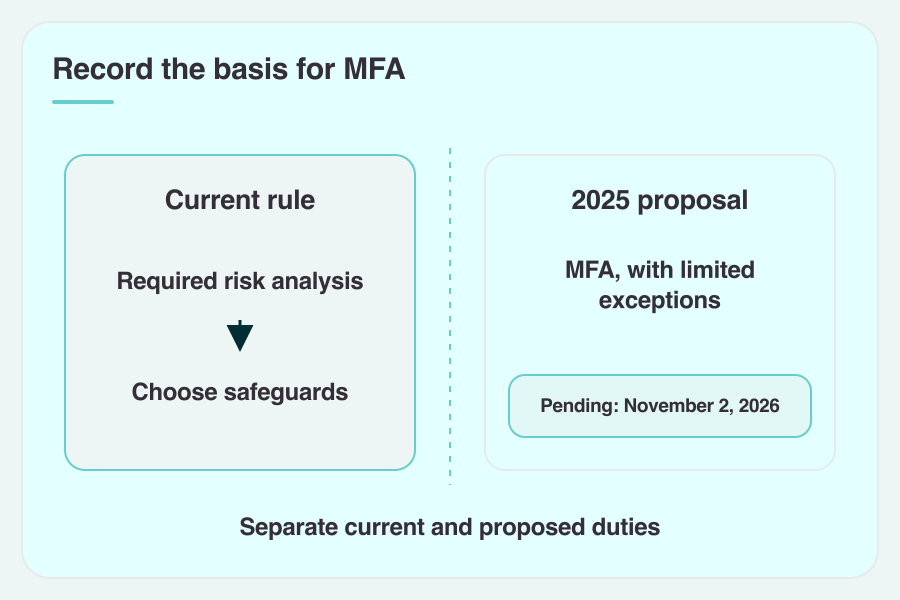
The current rule doesn't prescribe MFA by name. Your risk analysis still governs appropriate safeguards, and the proposed MFA requirement remains pending.
Key Takeaways:
- Build to the current rule: Keep required standards distinct from addressable specifications.
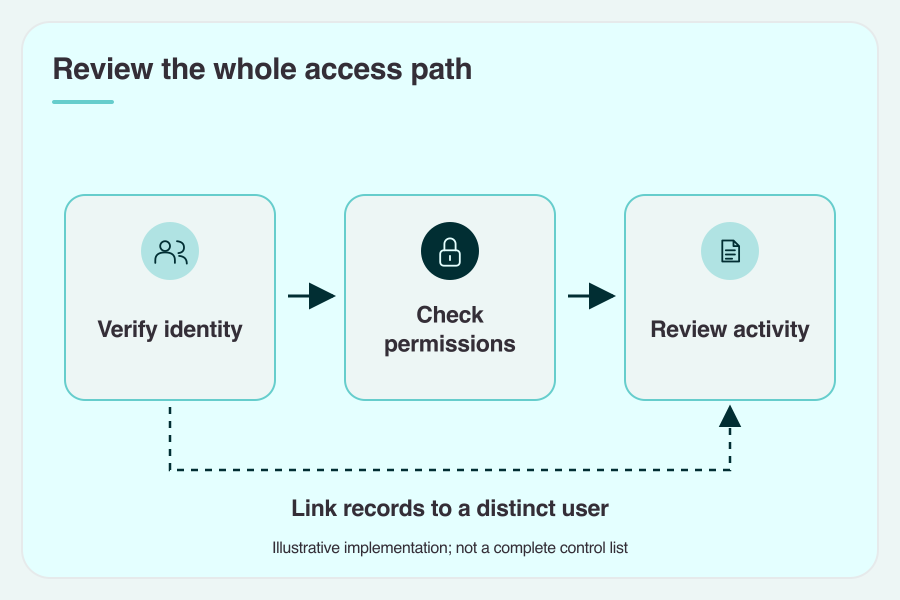
- Check the whole access path: Test permissions, sessions and recovery alongside sign-in.
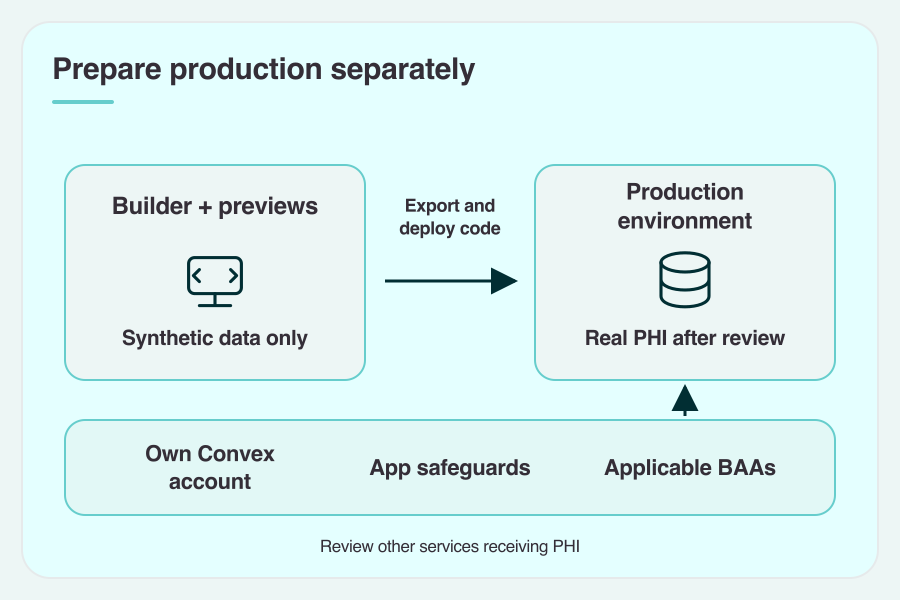
- Prepare production separately: Specode's builder and previews use synthetic data only.
What are the HIPAA rules for user authentication?
Start with the operative technical safeguards in 45 CFR 164.312. The table translates the four authentication-related provisions into implementation examples. It doesn't cover every Security Rule duty.
| Rule citation | Requirement | Required/addressable | What to build |
|---|---|---|---|
| 164.312(a)(2)(i) | Unique user identification | Required implementation specification | Give each user a distinct identifier so activity can be attributed to that identity. |
| 164.312(a)(2)(iii) | Automatic logoff | Addressable implementation specification | Assess an inactivity limit and implement it when reasonable and appropriate; document a different decision and an equivalent alternative when appropriate. |
| 164.312(d) | Person or entity authentication | Required standard | Verify that a person or entity requesting access to ePHI is who it claims to be. |
| 164.312(b) | Audit controls | Required standard | Record and examine activity in systems that contain or use ePHI. |
“Required standard” matters here. Under 164.306(c), you must comply with applicable standards, including authentication and audit controls. They don't need a separate “Required” implementation-specification label to be mandatory.
For an addressable specification, 164.306(d)(3) requires an assessment. If the measure is reasonable and appropriate in your environment, implement it. Otherwise, document why and implement an equivalent alternative if that's reasonable and appropriate.
Keep that decision with your implementation records. A timeout setting without an assessment leaves the reasoning unexplained. Emergency access procedures and the rule's other safeguards still need their own review.
Does HIPAA require MFA?
The current authentication standard doesn't name MFA as a specific method. It requires identity verification, while the required risk analysis and risk-management measures determine appropriate protection for your environment. An authentication design still needs that assessment.
HHS's proposal published January 6, 2025 would expressly require MFA, with limited exceptions. Checked November 2, 2026: that update remains proposed. HHS states that the current Security Rule remains in effect during rulemaking.
Treat a proposed requirement and a current implementation decision separately. Recheck the rule's status before publication or a production compliance review; a regulatory agenda's target date doesn't establish an effective deadline.
You can act on security guidance now. HHS's voluntary healthcare cybersecurity goals recommend MFA for internet-accessible assets and accounts where safe and technically capable. Record the authentication strength your risk analysis calls for and test that the deployed configuration delivers it.
Authentication methods, sessions and passkeys
A login method is one part of the access path. Give permissions and recovery the same attention when you test the finished flow.
Identity checks and permissions do different jobs
Authentication verifies the claimed identity. Access controls restrict ePHI to authorized people or software. Test those decisions separately: signing in successfully shouldn't settle whether a patient can open another patient's records.
Use synthetic accounts to check patient, provider and admin permissions. Include attempts that should be denied, so your review covers the access boundary as well as the intended route.
Session expiry needs a test
HIPAA gives no universal minute limit for automatic logoff. Select an appropriate inactivity period through the addressable assessment, then check the actual behavior.
NIST's session guidance distinguishes inactivity limits from overall session limits. As implementation checks:
- Verify that expired sessions stop granting access.
- Confirm that logout ends access using the old session.
- Test recovery and authenticator replacement, including user notifications and invalidation of replaced authenticators.
The NIST recovery guidance supports reviewing those paths deliberately. Its technical recommendations don't create a universal HIPAA timeout.
Passkeys need verified user activation
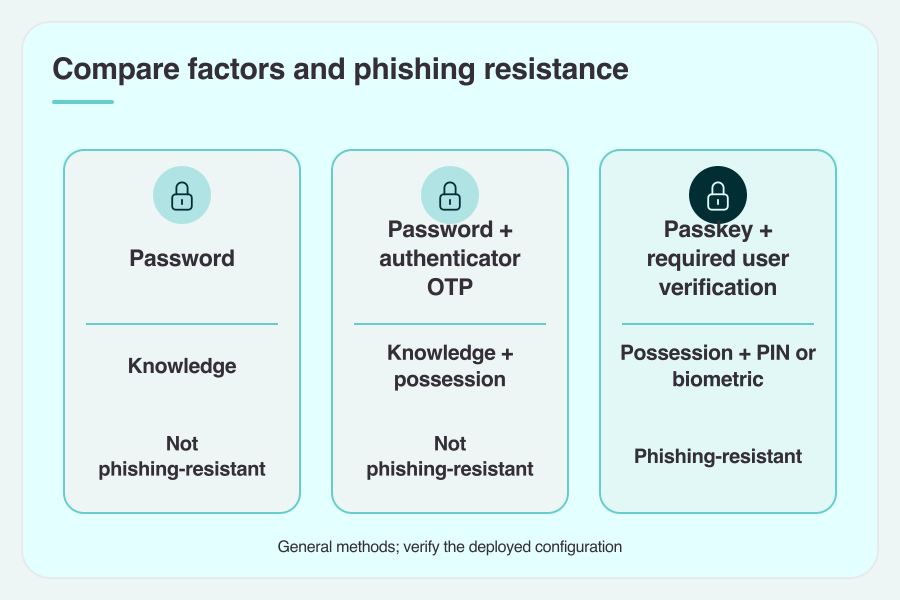
MFA combines distinct factors; two passwords don't supply two different factor categories. NIST's authenticator guidance also distinguishes factor count from phishing resistance. Passwords and manually entered one-time codes aren't phishing-resistant.
An email sign-in code doesn't establish strong MFA. NIST disallows email for out-of-band authentication; email verification and recovery codes have separate uses. Apply NIST's authentication guidance alongside your HIPAA risk analysis.
FIDO passkeys use cryptographic credentials for phishing-resistant sign-in. For a multi-factor passkey flow, require and verify local user verification, such as a PIN or biometric, alongside possession of the key. Check the configuration before making a multi-factor claim.
How Specode supports healthcare app authentication
Specode provides a HIPAA-ready foundation for authentication, data access and audit-friendly workflows. You can describe role or workflow changes in natural language, then test the resulting behavior before production.
The current implementation tools include:
- MFA setup: Maestro has an MFA Implementation skill. Verify the resulting configuration in your app.
- Audit logging: Maestro can plan and implement logging for approved PHI surfaces, with policy decisions reviewed during setup. Agree on coverage and log metadata without PHI values.
- Code review: the HIPAA Compliance Agent helps identify potential code issues. Its scan doesn't guarantee full HIPAA compliance.
- Authentication foundation: Specode uses Better Auth on Convex. Review the generated access rules for your app's roles.
Use synthetic data in the builder and previews. Test login, signup and reset flows on the deployed preview; the editor preview may not support those flows correctly.
Production readiness depends on your app's safeguards, security review and applicable agreements. Prepare the production Convex account and review other services receiving PHI before using real patient data.
You own and can export your application's source code. Custom adds managed services and coding support; code ownership doesn't depend on that support arrangement.
Healthcare application authentication and compliance checklist
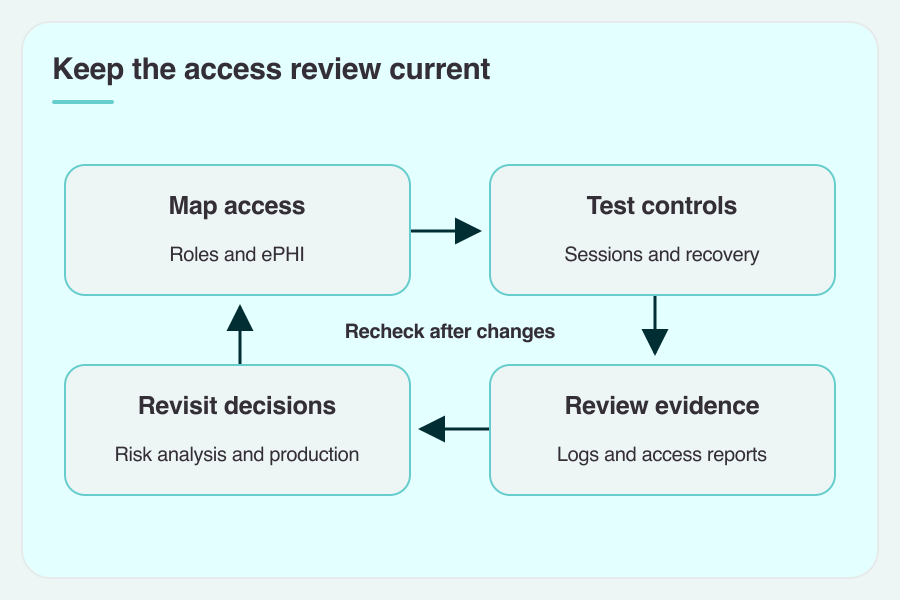
Use the required risk analysis and activity-review provisions in 164.308 to connect implementation checks with your compliance decisions.
- Identity and permissions: use distinct user identifiers and test access with each role, including attempts to open another user's records.
- Authentication strength: check MFA enrollment and recovery. For password flows, NIST recommends limiting failed attempts and rejecting commonly used or compromised passwords.
- Sessions: test inactivity expiry, overall limits and logout. Keep the addressable assessment with the chosen implementation.
- Audit coverage: agree which activity is recorded and who reviews the logs and access reports.
- Production services: prepare the security review, service accounts and applicable BAAs. Assess the full notification data flow; Google sign-in doesn't settle transactional-email safeguards.
Use that risk analysis to choose HIPAA compliant authentication measures that reduce risks to ePHI to a reasonable and appropriate level. The Specode production setup guide describes the separate deployment and agreement steps before PHI enters the app.
Frequently asked questions
Assign a unique name or number to identify and track each user. Your sign-in design must also verify identity and enforce authorized access to ePHI.
HIPAA gives no universal minute limit. Assess an appropriate inactivity period and document the decision, including equivalent alternatives where reasonable and appropriate.
Passkeys can provide multiple factors when the service requires and verifies local user verification, such as a PIN or biometric, alongside possession of the cryptographic key.